Ecology’s Next Top Model


Cooper's hawk (Accipiter cooperii) eating a mourning dove under the stairs to BioSciences West building on UA campus in November.


It was right there in the shadows under the stairs, glaring lidlessly at me with its round yellow eye above the sharp, bloody beak. A cooper’s hawk had caught itself what looked like a mourning dove (thanks for the ID’s, Max!), possibly at one of the campus feeders. An urbanized bird, it was vigilant as it ate, but unbothered by my photographing it from barely ten feed away or the laughing students passing by with cafeteria lunches or in gym clothes.

As I watched, a little mouse ran through the open dirt of the planter where the hawk was feeding, and up the concrete wall before disappearing into the bushes. A brave little guy, I thought at first. Or was it cagey? Did it understand the hawk posed no danger while occupied with its current meal? The time and effort it takes for the hawk to pluck the feathers and gorge itself on the insides of the dove is what biologists call “handling time”  (thanks to Hollings 1959) and this hawk spent at least an hour at it. Handling time is important to models of predator-prey dynamics, because without handling time, predators can eat everything they encounter. That results in different system behavior than when there is some level of satiation, when the predators cannot or choose not to eat one more bite (like us before Thanksgiving dinner, eating everything in sight versus after stuffing and cranberry sauce – satiated).

All these different models can make very different predictions about how biologically diverse a place “should” be. All the models are, of course, wrong (they are all simplified versions of the real world), but some are useful. As my advisor, Peter Chesson, frequently reminds me, good modeling is driven by the biology of the system. The math and the biology should agree.

Yet biologists have argued for a long time about whether predation or competition are more important forces regulating ecosystems. This was officially kicked off by a paper in 1960 (by Hairston and others) that hypothesized the world is green because predators of plant-eaters keep them from eating all the plants. But isn’t competition important too? I think so – I saw some last weekend.


A two-spotted octopus (Octopus bimaculatus) that squirted ink right into the lead instructor's face.


Over the weekend, I went to Mexico in my role as the Graduate Teaching Assistant for Conservation Biology. We hiked and camped through the borderlands and lava flows all the way to the beach where we scavanged the tide pools for octopus and the 23-legged sunstars.


Sunstars were once top predators in this system. They all but disappeared in the 1990s, and no one knows why, but they are coming back now.


Anemones competing for space on a rock.


While there, I took this picture of brown carpet anemones and a competing green anemone elbowing one another for space among the algaes on this rock. My guess there is that they directly compete for space. This kind of competition is kind of a lottery (Sale 1977). Each time one dies, a prize spot opens up. Its (now former) neighbors have all bought all the tickets they could by producing as many little gametes as possible, which turn into larvae.

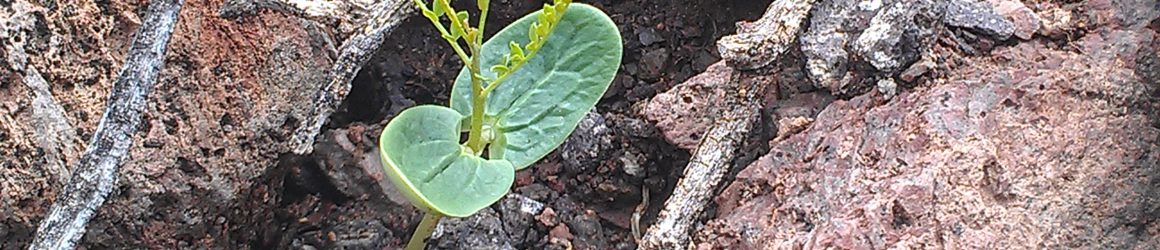
Scant rainfall and young soil is somehow enough to support these plants.

Further north, in the desolate lava flows and Maar craters and drifting dunes of the Pinacate Biosphere Preserve, I was startled to see so many plants growing there. The annual 3 inches of rain supports dozens of reptiles and mammals, too! Even big pronghorn antelope! How might you model the competition of the plants for the water? Bill Ricker has a model that makes growth of each individual decrease exponentially as other individuals compete for its resources.

All that is a lot to learn from to explain biodiversity, agriculture, cities, global warming’s effects, etc. Here’s a question: what do you think ecologists should use these to answer? If you got to ask for ecology’s next top model, what would it model? What would it tell us?

More details on papers I referenced above:

Hairston N G, Smith F E, Slobodkin L B. Am Nat. 1960;44:421–425

Holling, C. S. 1959. “Some characteristics of simple types of predation and parasitism.” Canadian Entomologist 91: 385-98

Ricker, WE (1954). Stock and recruitment. Journal of the Fisheries Research Board of Canada.

Sale, P. 1977. Maintenance of high diversity in coral reef fishes. American Naturalist111:337–359

Private Eye for Hire

Being a scientist is not so different than being a reporter or a detective, but much less conducive to making action movies. I am on to a new case that (if it all goes well) may define the course of my dissertation.

The crime: buffelgrass, a suspect you already know from my post a month or two ago, has been accused and convicted of invading the desert and decreasing biodiversity.

That’s old news.

The new twist: A recent PhD student from University of Arizona smelled a rat, you might say. The result: a new “personality of interest” has been fingered as potentially involved: the rodent community. Has that community been complicit? An innocent bystander? A silent victim itself? Or a shady superhero quietly attempting to ameliorate the damage?

Sounds like a case for Pacifica Sommers, Private Eye.

So I have been busily writing applications for fellowships that would allow me to focus on research instead of teaching. Like any good detective, I have been interviewing experts and reviewing the documented evidence day and night, fueled by coffee binges and Halloween candy (sorry trick-or-treaters). For these research proposals, I have to get to the bottom of the story, preparing the reader for the exciting climax where I put myself in a dangerous position in order to confront the culprit and reveal the answer.

And there’s where being a scientist gets a little less exciting in the action movie sense. Instead of one night of tunneling under the suspected site of the crime, pistol concealed in my pocket and tape recorder running, I will spend years tramping all over the mountains surrounding Tucson, digging in cages and measuring trees and trapping rodents. I will spend countless hours between in my underground office, gritting my teeth as I troubleshoot the latest MATLAB program that is generating the theoretical predictions I am testing out in the field.

On the upside, if you hire this private eye, the danger pay should be lower than if I were sneaking about with pistols in the dark.

Battle Royale: Part II

Erodium cicutarium, the non-native plant in the experiment. The other was Astragalus nutallanius, a native.

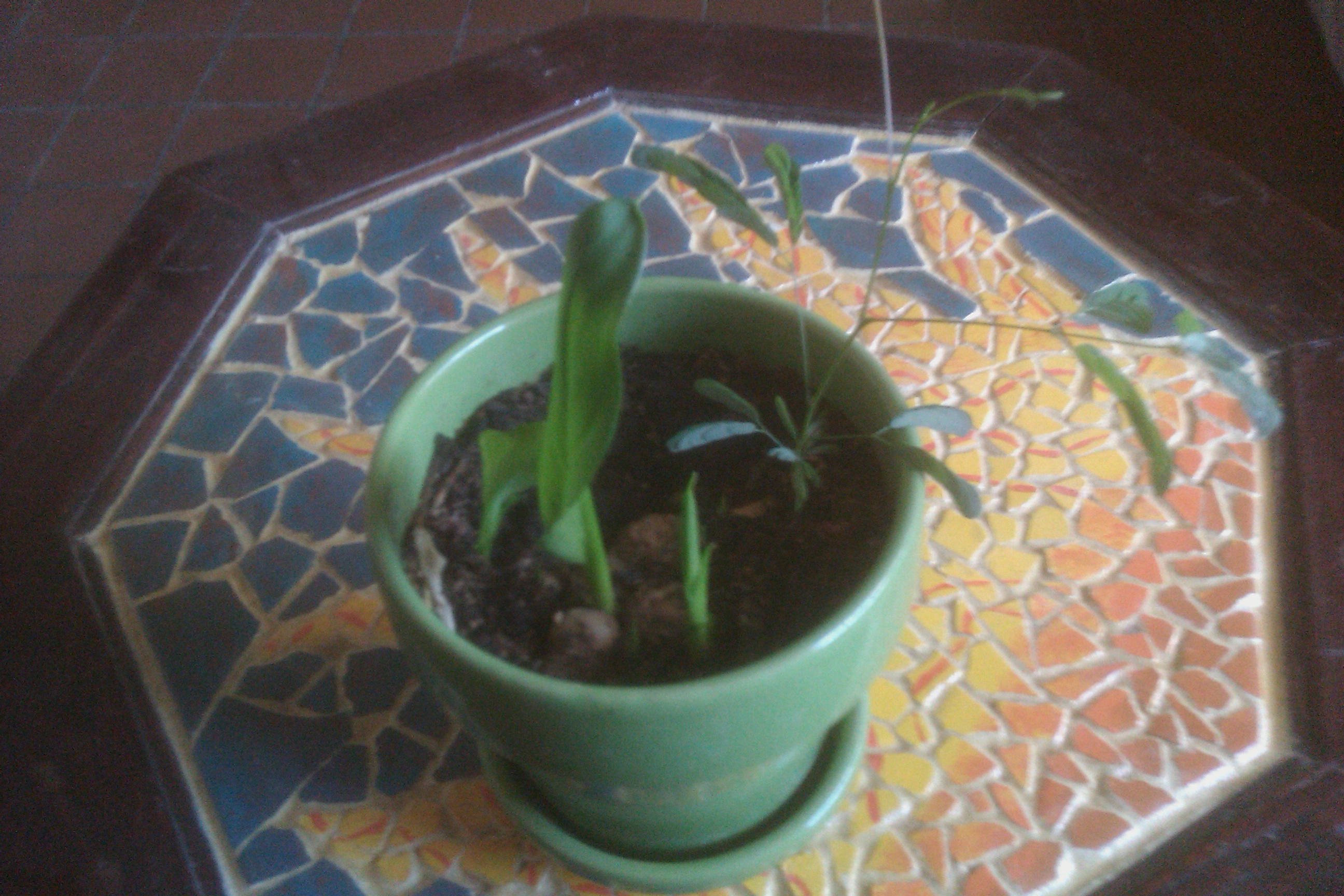
Just last week I blogged about the mystery plant in my calla lily’s pot, and how it’s an accidental ecology experiment. Today, Elieza Tang presented her summer research to the lab at our weekly meeting. She was paid by a Research Experience for Undergraduates grant for the summer, a category of money from the National Science Foundation, to do research on the effects of competition on the growth of two desert winter annual plants. She studied these in pots in special growth chambers  – kind of like my flower pot in my kitchen!

Why was she presenting her summer research in October? Did she not finish this two months ago? Actually, the two month lag time makes sense. This experiment, done in conjunction with the Portal project by Danielle Ignace and Peter Chesson, took some setting up and designing. Growth chambers break, experiments get delayed. Then it took months of watering, watching, and measuring as the seeds in the pots germinated and grew. And finally, once she had the data, she could set out to do one of the most difficult parts of an experiment: remember what the you-know-what her study was about in the first place! In all seriousness, analysis of the results can be one of the toughest part of science, because with a number of results that all vary a little bit, you have to prove there is a signal cutting through the noise that answers your question. The cigarette industry exploited this fact for years, using the noise in studies of cigarettes’ effects on health to argue there was no signal within it.

Like I mentioned, Elieza put seeds in pots, placed pots in growth chambers, and faithfully watered and measured them as they grew. Some of the plants had the whole pot to themselves, others shared it with seeds of their own species or the other species, and still others shared a pot with both types of plants. At the end of the experiment, she dug them all up and weighed them to see if plants with many competitors grew less. Many annual plants’ seed production is highly correlated with its size, so this is a good indicator of what the population might do in the future – grow or shrink. And there was one more wrinkle – she grew these plants at three different temperatures.

I won’t give away just yet what her results are, nor her conclusions and analysis. But I can tell you it’s exciting because it matches the researchers’ understanding of how these plants interact in nature, and fits nicely into the theoretical framework of the lab.

Feel free to leave a comment speculating what happened, or use this to change your bet on whether my calla lily will survive, or the mystery invader will.


Battle Royale

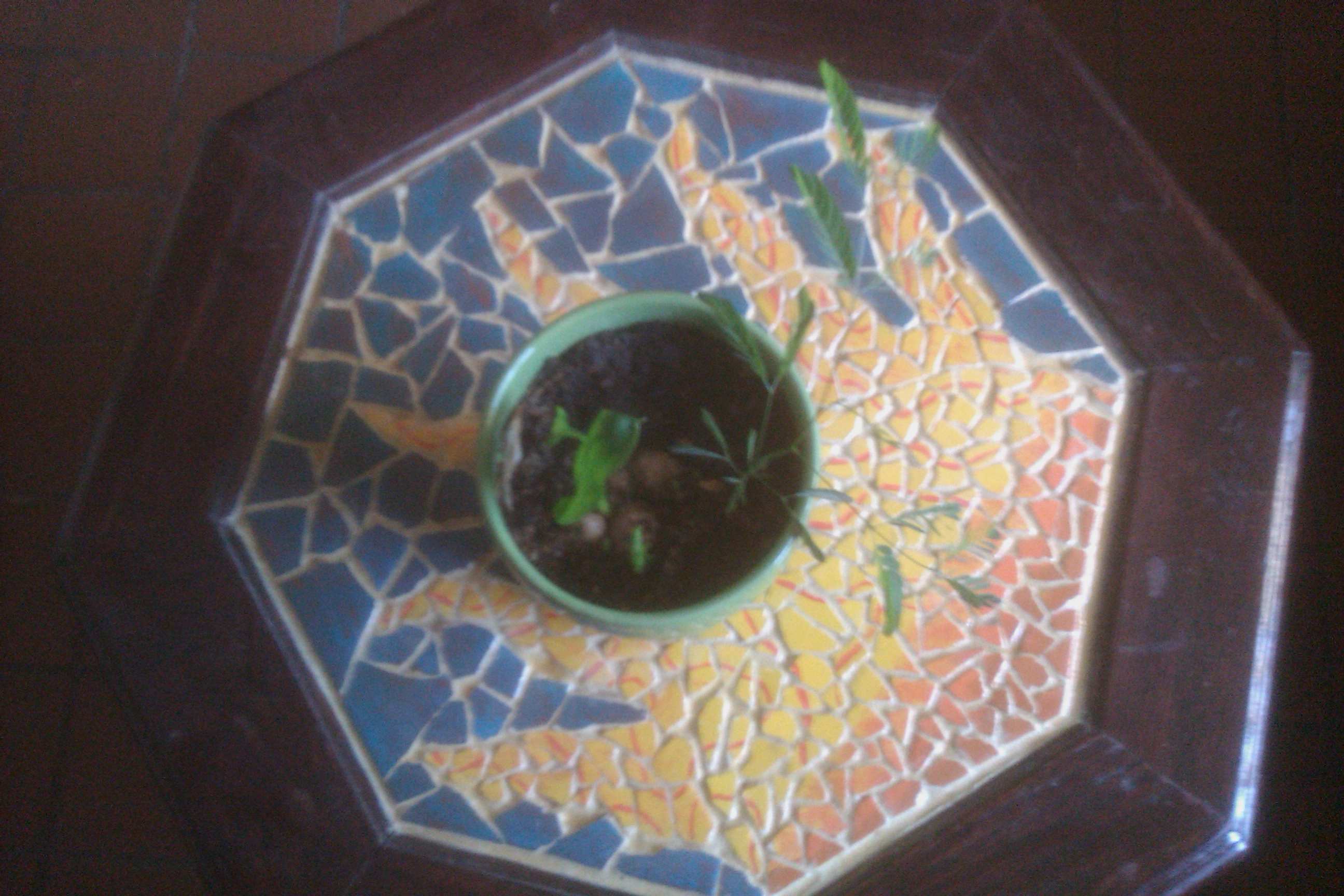
The battlefield: calla lily vs. mystery colonizer

I’ve begun to see biodiversity and ecology everywhere, even in my kitchen. No, I’m not talking about what ecosystems have sprung up in those month-old house party leftovers…. It’s a slightly more traditionally ecology-y place: in a flower pot.

This story beings last Valentine’s Day, when I was given a lovely potted calla lily by a certain gentleman. Fun facts about calla lilies:

1) It’s not a lily, though it does look like one. It is actually in a different genus (scientific name: Zantedeschia aethiopica).

2) It grows from a rhizome, which is like a bulb. (“Hey, there are potatoes in your soil!” exclaimed my roommate one day.)

3) It can become an invasive weed, although it is unlikely to in arid Arizona.

4) A brief search of Web of Science (a database of scientific peer-reviewed journals that I have access to through the University) reveals that they are studied ecologically as a native part of African wetlands, and that like many ornamental and commercial plants, there is ample research on their genetics and pathogens (diseases) that can affect them.

After the original stalk wilted and died back, I continued to water the soil, and place it in sunny spots. (I wonder if the certain gentleman believed I had carelessly let it die?) Eventually, something sprouted and grew. But it wasn’t the calla lily! Now the calla lily is sprouting again, sending up numerous leafy stalks from several rhizomes.

If I want the lily to live, I should remove the extra rhizomes and the other plant. After all, if they get any bigger, they will be in mortal competition. As it is, they are likely to be competing already. And, like any sports fan, I am kind of interested to see how this plays out.

Who do you think will win?

So my questions for you are: Who do you think the mystery plant is? (And where did she come from?)  Which plant do you think will win? Would you put money on that?

Mixer

You’re invited to a mixer! The theme is Southwestern, with some tropical influences. The guest list is rather extensive. This event will draw participants from the Rocky Mountains to the north and the Sierra Madre cordillera to the south. Some Chihuahuans may show up, and certainly plenty of Sonorans, and maybe even some from the California and Nevada Mojave. Oh, and one more thing: for the most part, this is a dry mixer.

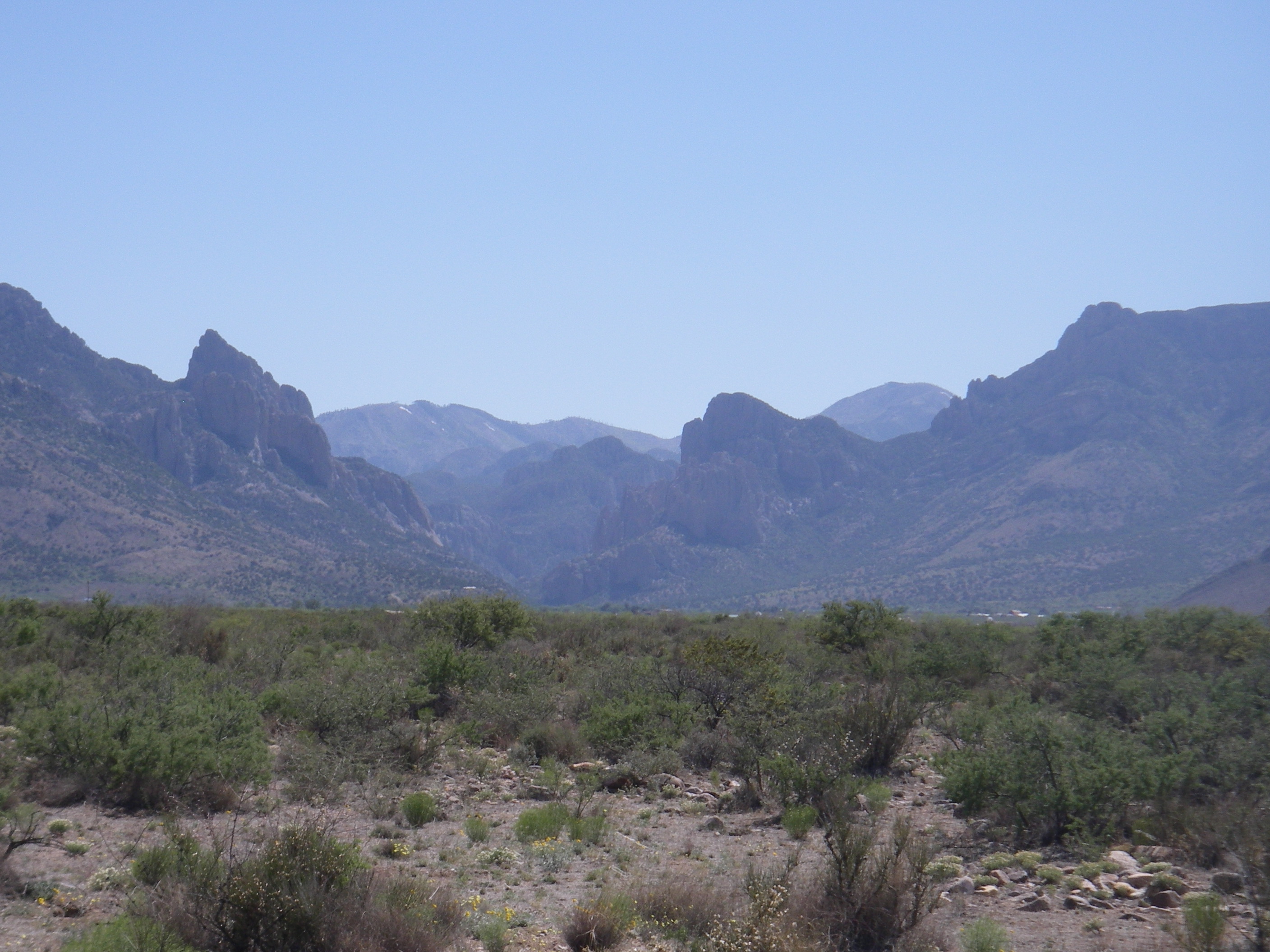
This mixer is essentially Arizona. For such an arid environment – right in the global belt of deserts at 30 degrees north – it is incredibly diverse biologically. The Sonoran Desert, which is the region encompassing Tucson, is bordered by the Chihuahuan Desert to the east and the Mojave to the north and west. As far as I can tell, in the days of Settling the West these were all lumped in together as the Great American Desert, but now we recognize the differences in the regions. You can see it in the pictures I have taken (below).

Mojave Desert
Sonoran Desert
Chihuahuan Desert

Then there are the mountains. The Sierra Madres to the south, a frightening place full of drug running and violence, have species migrating in from the tropical occidente. The Rocky Mountains to the north, through Utah (my hometown) up to Canada, allow more artic-y species to intrude further south on their ribbon-like finger of alpine climate. Arizona connects those ranges with a series of “Sky Islands,” small mountain ranges with pine forests clinging to their crowns, bordered by an inhospitable sea of desert. It may be the only place where you can essentially drive from Mexico (complete with parrots but lacking wolves) to Canada (complete with Douglas fir and black bears, but no longer any grizzlies) in an hour or two.

Between the relatively low biomass on the desert floor (making math and models tractable), the isolation between the islands in the sky (giving replication), and the gradient of climates and juxtaposition of all these opportunities, this mixer is a great place to study biodiversity.

The top of Mount Lemmon is dominated by Douglas fir and quaking aspen.
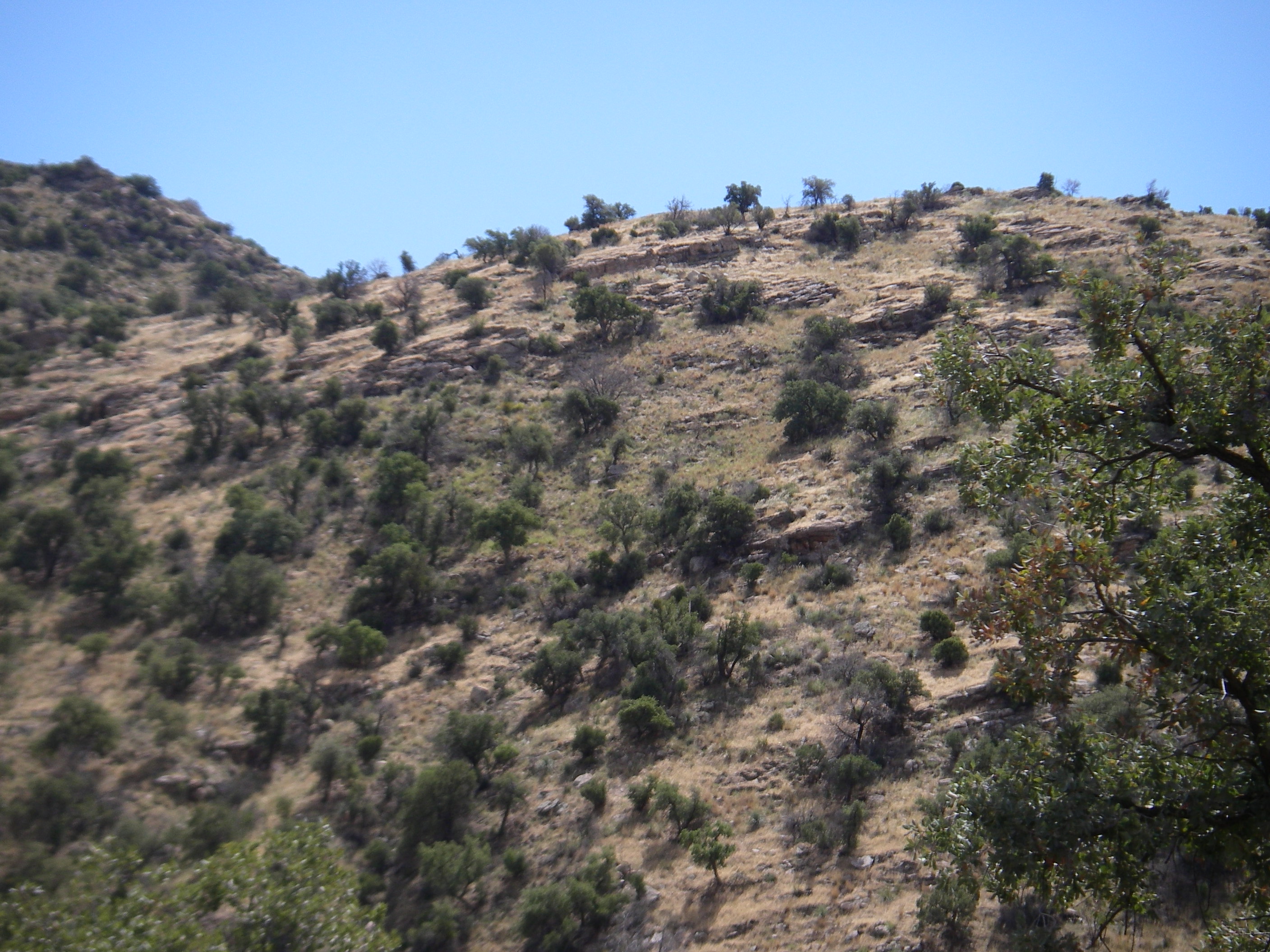
Compare this to the Sonoran Desert shot above. This oak-grassland chaparral is only a couple miles up Mount Lemmon's Sky Highway.

A few miles further, you get into oak-pine forest. Students are removing a straw-sized core from the tree to count its rings and tell its age. The tree will plug the hole within hours using sap.

Invasion

The sun beat down on the small crew of volunteers armed with six-foot segments of Rebar. When I say the sun beat down, I mean the Arizona sun. It beat the volunteers as if with Tasers and billy clubs. It was seven o’clock in the morning.

So why the volunteers for this torment? They were fighting – and apparently winning – a small but significant skirmish in a war with an illegal invader that is threatening the very homeland they have inherited, or for the most part, adopted. And yada yada yada about the war and menacing alien metaphors. The popular literature on buffelgrass is already pregnant with them. I doubt I can add much, either to that or to the raft of comedians using Arizona crazy as their favorite subject of jokes these days.

Buffelgrass is a bunch grass originally from the African savannah, as far as I can find out. It was – and is still – widely planted in North America, especially in Texas and Sonora, primarily for cattle forage. But in Arizona, it has taken on a life of its own and been declared a noxious weed. Biologists fear the choking, fire-prone grass that spreads here on its own could wipe out the iconic species and forever change the ecosystems. Nothing against African savannas, but picture Arizona without the branched saguaro cactus, or tentacle-like ocotillo or broccoli-green trunked palo verde. People here are understandably concerned.

The Sonoran Desert Weedwackers are a volunteer group that has taken matters into its own hands – in coordination with the Desert Museum, Pima County, and other relevant authorities. Marilyn Hansen, who has been organizing and compiling a really remarkable data set on what the Tucson Mountain Park chapter has accomplished, beamed as she told me about the reaction she had gotten from local officials before clearing so much area, and such dense stands.

“They said this was impossible. Well, to Weedwackers, those are fighting words.”

That may be a point of pride to someone with the time and drive to spend at giving it a shot, but others have to calculate if the resources are worth the risk. Upon mentioned of the project my Conservation Bio students will do on biodiversity in the wake of buffelgrass removal, an outdoors trip leader in the area recently asked me,

“Do you think we can get ever get rid of it? Or is it a lost cause by now?”

I gave him my best scientific answer: I shrugged.

But it is something worth giving more thoughtful consideration to: should we spend the tens of thousands of dollars to spray Roundup from helicopters, ask the scores of volunteers to labor under the vicious Arizona sun, bulldoze acres and acres of buffelgrass covered land to replant natives?

Katriona Shea and Peter Chesson published a paper in 2002 titled “Community ecology as a framework for understanding biological invasions.” In it, they provide a brief run-down of the models and parameters that matter most to determine local coexistence, exclusion, and invasion processes. They claim you can divide an invasion into two parts: arrival and spread. While Mexico’s government continues to pay ranchers to plant buffelgrass, there is little we can do to slow seeds blowing in over the border. But what happens when they arrive? This is the community ecology part, where we look at the grass’s response to the environment, to competitors, and how it shakes up the predation pyramid.

I may spend some more field time in the near future examining the trophic (fancy word for “food web”) interactions, and the way it competes with natives for water and other resources. But a quick and dirty equation can provide at least the trivial answer the trip leader’s question: Under what circumstances can the Weedwackers win?

Population growth = birth rate – death rate.

When the Weedwackers, along with the county, private landowners, and others can drive the death rate (pulling, spraying, etc.) of buffelgrass higher than its recruitment rate (germinating seeds from populations in Arizona), no matter how many seeds blow over the border, they will not find a “niche opportunity,” as Shea and Chesson (2002) put it.

Impossible?

Tell that to the Weedwackers.

[Note: I had a bunch of great photos of a small desert tortoise we found, rebar use, before-and-after shots, etc. But… in my sleep-deprived haze this week I apparently cleared my camera card memory after only examining them on my laptop, not saving the photos. Note to self: sleep more.]

Why are there so many species and what are we going to do about it?

There are an extraordinary number of life forms on the face of the earth. I mean, just staggering. Somewhere in the neighborhood of 2 million species have been described, depending on how species designations change as we get new information. That’s a hard number to wrap our heads around.  Most of us have probably never seen 2 million somethings at one time (not counting bacteria and other stuff not visible to the naked eye).

All those species have no business being alive and well! Didn’t Darwin’s theory of evolution suggest that when species compete, one of them wins and the other, well… tough luck? In Princeton biologists Rosemary and Peter Grant’s Galapagos study made famous in Jonathan Weiner’s Pullitzer winning The Beak of the Finch, people actually watched species converge and differentiate due to resource competition. So does that mean that each of these two million species is part of a neat little food chain, with each having their very own food, their very own kind of home, the predators that are only hunting them?

Corner in Barrio Anita

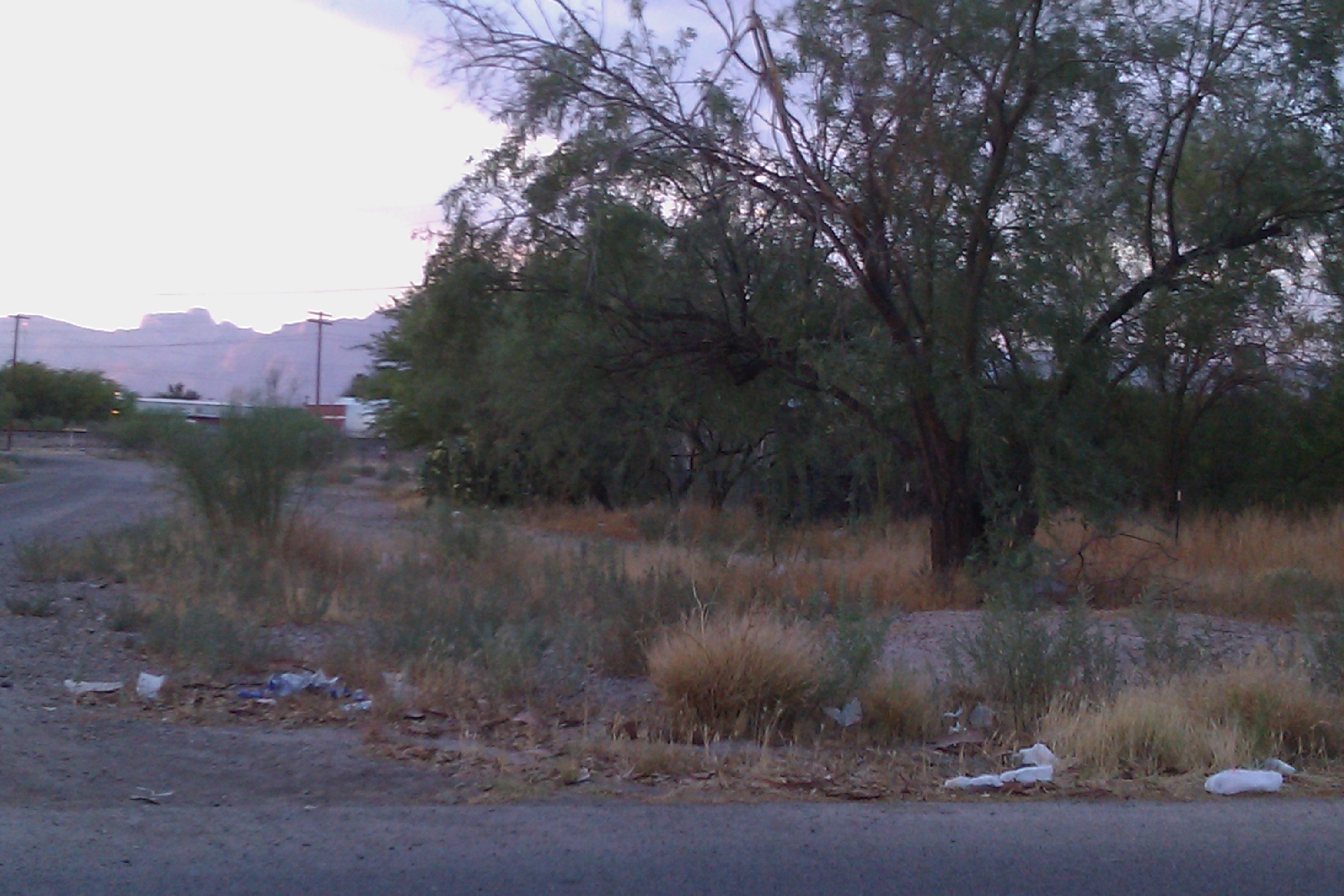
Walk outside and look around. Along my street in Tucson, Arizona, there are plenty of empty lots, populated by weeds despite the brutally hot summers here – not many plants, and not many species, but certainly more than one. Rarely do I see a monoculture occur naturally. If you live near the Pennsylvania temperate forests, take a hike in the game lands and look at all the different trees and shrubs. Up in the Rocky Mountains, the fields of summer wildflowers are multicolored because of all the different species. The same holds true in Californian tidal pools, and in rainforests from Portland to Panama.

It seems that a neat little picture of who lives where and eats what will not suffice to explain the world around us. Biodiversity is somehow maintained while species compete ferociously. A species’ ecological niche is not a tidy little box, but overlaps generously and unevenly with its competitors.

How is this biodiversity was maintained? Why are those weeds coexisting in the empty lot next door? Or are they? Any why aren’t any petunias coexisting with them? I hope studying mechanisms of local coexistence will help us understand its loss and what that means.

Species are vanishing faster than humans have ever experienced, and we are contributing to that. (Throughout the fossil record, but well before we were around, there have been 5 really big extinctions, of which the well known dinosaur extinction was one. We may be approaching a sixth.) Well-studied birds and mammals have been disappearing at roughly a species a year, and those are just the ones we know about. Thousands of square miles of Amazon rainforest is cleared every year, which, in such a lush and diverse ecosystem may be spelling extinction weekly for localized plants or beetles. It’s like we are playing a giant game of Jenga. We remove structural supports of this great towering network of ecosystems one by one, hoping it won’t collapse.  Of course, if we keep going and keep going, eventually we would collapse, but are we really going to get to that point? Scientists are trying to answer that question: how much diversity is enough?

That’s why I’m studying coexistence mechanisms in Peter Chesson’slab at the University of Arizona for my PhD. Members of our lab study the storage effect, relative nonlinear responses to competition, covariance of environment and competition, nonlinear competitive responses, and other fun mechanisms in variable environment ecological models.

Still trying to figure out what that mouthful means? So am I.