Honestly, answer it. Here are a couple beautiful photos my friend Ty took to enjoy while you think about it:
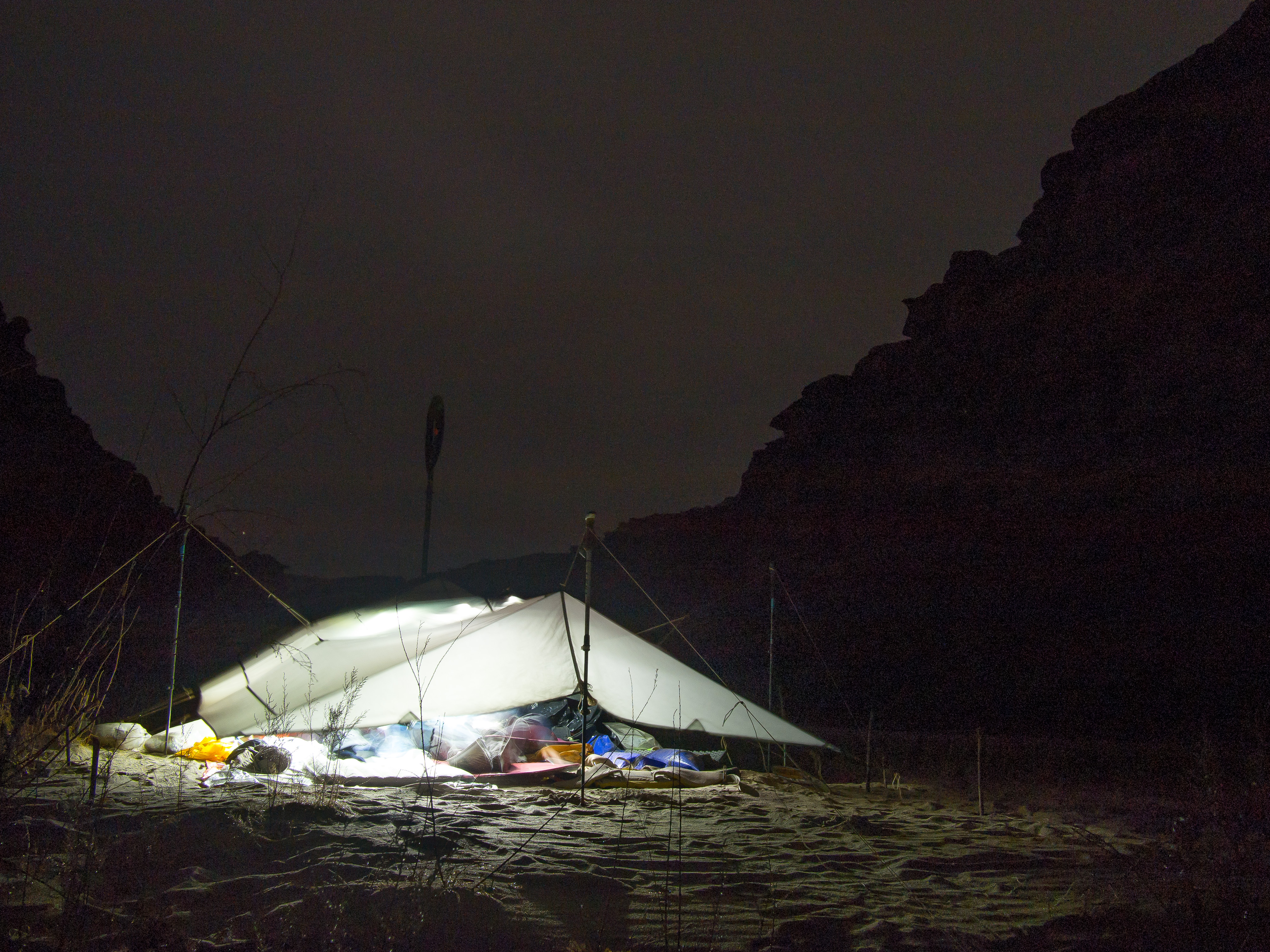
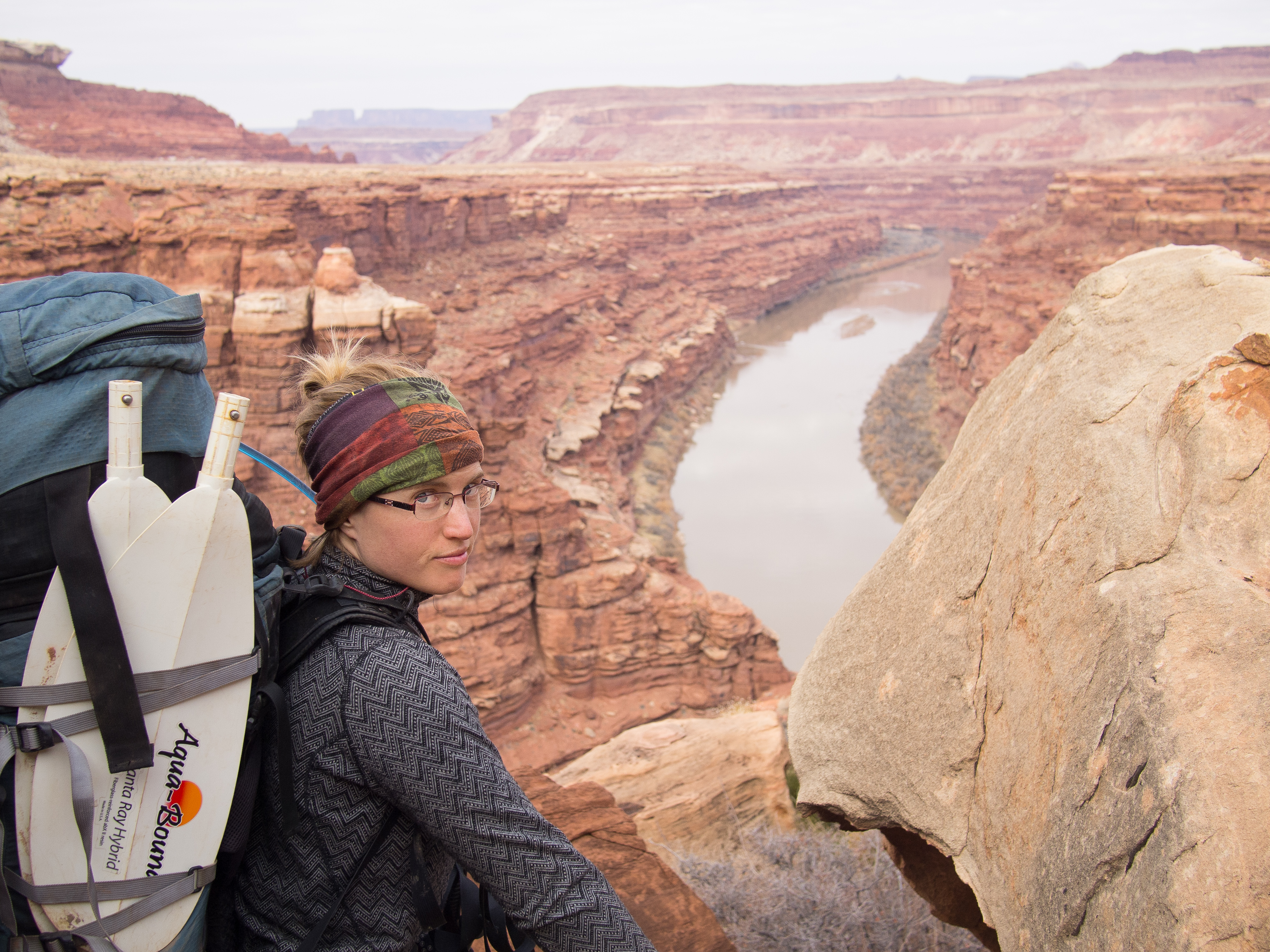
This photo casts serious doubt on whether I belong in the backcountry. (That’s me doing “the walrus” up on to a redrock ledge in The Maze last January.)A night camped on the Green River means pooping in bags and packing it out. Do you have what it takes?
What did you answer? And what did you take “people like you” to mean?
Your answer might depend on who you see represented in ads for outdoor brands, or in films at the Banff Mountain Film Festival, or who you see out on trails.
Or how often you yourself get outside.
There are lots of reasons some groups get out and enjoy nature more than others, which are beyond the scope of this post, but one factor is income (which is, of course, connected to many other factors). If you don’t have the money for a car (or gas, or gear) or the time off of a low-paying job, it can be hard to take your family to the nearest national park or wilderness area. If you’re not very healthy, or you have a hard enough time with daily life, the idea of tackling an optional challenge – physical exertion in a strange new place – may seem like a luxury.
And if you never have been out hiking, it’s sure hard to imagine yourself doing it. One way to solve that is to give more people (kids, families, everyone) the opportunity to leave the city and experience nature.
You think we’re going to climb down WHAT to get to that river?
I volunteer with an organization through the Sierra Club, that recently changed its name from the 30 year old “Inner City Outings” to “Inspiring Connections Outdoors,” but the goal of the all-volunteer nonprofit is to give kids an opportunity to experience nature who might otherwise not get out of the city. Volunteers who have passed background checks and been trained in outdoor skills and first aid partner with Title I Schools, halfway houses, and other groups that work with at-risk and underprivileged youth to provide opportunities to go hiking, caving, camping, and stargazing.
The primary expense the group has is transportation costs for the kids, although when we can, we like to provide healthy snacks so everyone has had more than a bag of Hot Cheetos to fuel their adventure.
A group of MBA alumni from Arizona State University that have an annual tradition of hiking the Grand Canyon Rim 2 Rim 2 Rim (47 miles and change… and a lot of elevation change!) are using their trip to raise money for this group. I appreciate these guys who feel they belong in the backcountry raising funds (and awareness) to help a new generation expand that pool of people who feel they belong there, too.
Want to kick in to support getting underserved youth outdoors in the Tucson area? Donate to their campaign: https://www.crowdrise.com/r2r2r2015/fundraiser/
And in somewhat a related note on representation in the outdoors community, for women who are annoyed that skis made for women’s sizes and shapes are often of lower performance aimed at intro-level skiers and snowboarders rather than the advanced and expert, check out this kickstarter of high performance skis and boards for women (sans the pink flowers, as a bonus!):
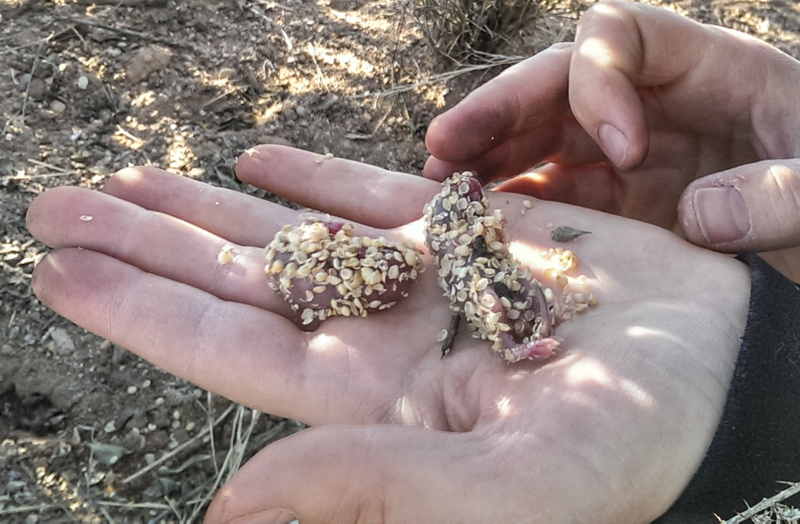
Kangaroo rat pups born in a trap overnight (they are covered with millet from being dumped out of the trap).
Back in January, I speculated on this blog about some disorganized observations I had made of unusually high rodent reproductive activity (resulting in pups born in traps overnight in February).
Since I followed that with a post on the importance of systematic data collection, rather than relying on a series of anecdotes, I should probably follow my own advice and provide some data analysis on the rodent reproduction.
Fortunately, the observations I wrote about in January were made at the site of a long term experiment on the interactions of rodents and plants. Ecologists have collected thirty-eight years of data on rodent reproduction, along with systematic data on weather and plant life.
Base camp for the long term project started by Jim Brown in 1977.
Erica Christianson, a doctoral student at Utah State University, is studying these interactions at Portal as part of her dissertation work, and she crunched some of the numbers on reproduction and weather conditions (and generously allowed me to share them here!).
Erica’s main hypothesis, and one I wondered about in January, was that the large rainfall in the late summer and early fall last year resulted in more seeds available in early winter. With sufficient energy to stay warm and active during the winter, females could afford to breed.
A very quickly constructed scatterplot reveals that years with higher rainfall in the late summer and early fall do indeed have higher rates of female reproductive activity observed the following January:
You might notice a couple of things about this plot. First, you would be justified in pointing out that this is a correlation, and does not prove that the summer rain causes high January rodent reproduction. But it is consistent with a reasonable explanation for it.
You might imagine designing an experiment to test the causality more directly, in which all the plants are killed before they produces seeds after the next year with high summer rainfall. That would be an ambitious experiment on this landscape, involving a lot of person-hours with some herbicide or clippers, but it could be done.
You might also notice that fall precipitation does not perfectly predict female reproductive activity. Probably that interacts with several other factors. Ever noticed how you get hungrier in cold weather? Your body burns more calories to stay warm. (This is why mountaineers are advised to continue eating as much as possible if caught out overnight on a cold peak.) I suspect that if we also looked at the temperatures each winter, we might find that less rain is required in warmer winters to boost female reproduction, and the rainfall plus temperature would explain even more of the variation in reproductive activity. But that probably best left to future posts.
A lot of grass grew in the San Simon Valley following heavy late summer rains, providing substantial seed resources this winter.
I should also point out that these results are extremely preliminary. Typically, to have some confidence in a conclusion, the full description of the methods for data collection and analysis should be subjected to peer review – that is, at least three or more other experts will critique it before it is published. That’s definitely not how my blog works.
If you are interested in getting out in the field to collect data used in real long term and large scale research projects, check out iNaturalist, National Phenology Network, and the Arizona Sonora Desert Museum. If you are in Tucson this weekend for the Tucson Festival of Books, visit Science City to meet some of these folks in person and pick up brochures for other Citizen Science opportunities as well!
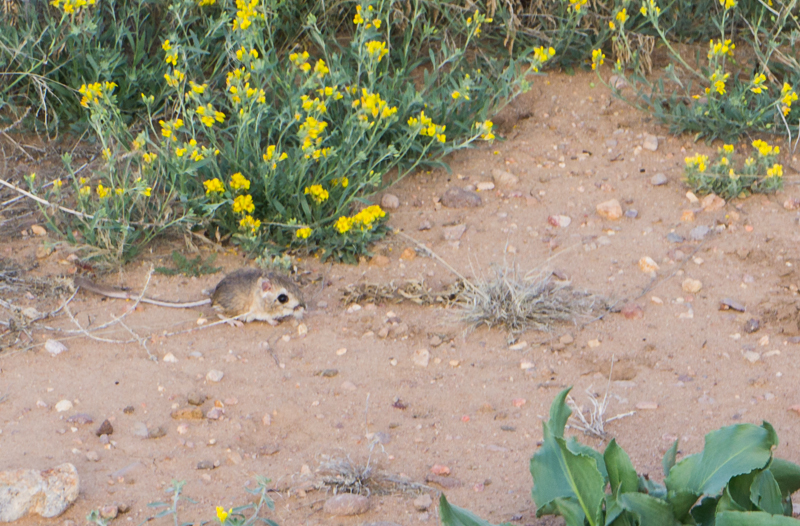
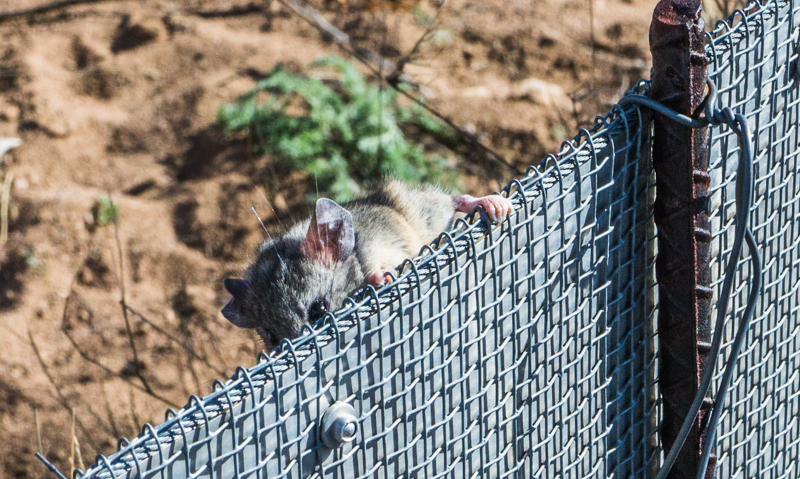
One last photo: a cactus mouse (Peromyscus eremicus) that was released and immediately climbed the fence supposed to keep the rodents larger than that out. Let’s hope the kangaroo rats are less bold.
[Updated 3/17/15: I changed the label on the x axis of the grass from “Fall precip” to “late summer” to more accurately reflect how the plants seemed to respond to the rainfall and be more consistent with my text.]
Students from Flowing Wells Jr High attending UA Science Sky School don’t just make anecdotal observations: they take measurements in a variety of environments (leaf litter in burned and unburned sites).
I first heard this phrase from my friend, Brad Boyle, last weekend (though he was cheekily commenting that the plural is data). An anecdote, in case you’re not sure, is a story about something that happened, usually to you or someone you know. It might be something you noticed once, or even a number of times. And that provides you with some information. But that does not necessarily make it data.
Data is information that should be collected and analyzed in a standardized way to answer a question or estimate some value (like the growth rate of a population or the strength of a bridge). One problem with anecdotal information is that it is not collected with the intention of providing a large or unbiased sample. Basing our understanding of the world around us on anecdotal information could lead us to the wrong conclusions, resulting in poor decisions.
For example, many medical procedures have variable outcomes. Imagine you have some inflammation of the elbow (lateral epicondylitis) from playing tennis, rock climbing, or just everyday life. Corticosteroid injections seem to be the most effective way to get a short term reduction in pain and inflammation so that you could use that elbow in the next few weeks. However, the study I linked to reported a 92% success rate at the six week mark. What if you had a big competition coming up and wanted to decide whether to go for the treatment? If you talk to only your aunt, who had had the procedure, and was part of the 8% it did not help, you might decide not to get it. Especially if you heard a second anecdote from your best friend, who was also not helped! There you have multiple anecdotes, but a larger sample might reveal there is a pretty good chance it would help you be able to compete.
Understanding the scientific method is important for everyone, not just scientists. If your vacuum cleaner breaks, to borrow an example from another friend, Marielle Smith, scientific thinking can help you to fix it more efficiently. Instead of replacing parts at random, you might form a hypothesis about what piece failed. That hypothesis might be based on anecdotal information, like what part of your friend’s vacuum cleaner broke. Or it might be based on observations, such as where smoke is emerging from. Either way, you can test your hypothesis by isolating that part of the vacuum to test it, or by replacing it and trying the vacuum, ultimately spending less time and money than replacing parts at random.
The same students from Flowing Wells presenting graphs of their data at the Sky School Symposium. (They even have error bars on their graphs!)
Question everything. Question sources, and learn who has the expertise to be right about a subject. Just as a theoretical ecologist might not have the skills to remodel a kitchen professionally, a lobbyist with no scientific training may not have the skills to validly contest a research finding. Make up questions while you’re driving (or biking) to work, or waiting in the grocery store check out line. Just be curious about the world.
2. Practice answering questions.
Design a way to collect data to answer them, even if you do not intend to hang out at the grocery store all day collecting that data, or use Fermi estimation to get close. Why? It’s more entertaining than watching the driver singing (or worse) in the car behind you, and as my junior high math teacher always said, it’s like going to the gym for your brain. (If you enjoy this kind of problem, you will really enjoy the What If? page of xkcd.com.)
3. Learn the difference between causation and correlation (and more about trends, variability, and probability in general).
4. Interact with scientists and science educators at your local university.
If you live in Tucson, check out the Cosmic Origins lecture series, which is free and open to the public (but crowded – get there early!), or Science Cafe talks at local breweries and restaurants. Visit the Laboratory of Tree Ring Research, see a laser show at Flandrau Science Center and Planetarium, use the telescopes on Mount Lemmon during SkyNights programs or with Sky School, tour Biosphere 2 or the Mirror Lab, or hike up Tumamoc Hill. The Gem and Mineral Show is going on now – find the UA Geosciences students teaching there! And Tucson Festival of Books has a whole Science City where you can see rockets, volcanoes, gila monsters, and more – for free March 14-15. Even better, volunteer for Science City this year (they still need many, many volunteers)!
6. Use science to shape how you communicate with people around you.
There are very rational reasons that people may not have all the data or scientific interpretations on a topic, like vaccinations. Going out and doing research takes time and effort, and people have lives to live. Researching every little thing is impossible. So instead, we lump issues together into our identities to decide how we feel about them. Cognitive science has demonstrated that attacking a person’s beliefs, or implying that she or he is an idiot for not knowing something, is the best way to solidify a previously held belief. So when engaging with someone less scientifically literate than you, use what evidence suggests is the best way to get them to change their beliefs: acknowledge their fear or doubt are real and reasonable, acknowledge that data and scientific papers are often not open access, and… ask questions.
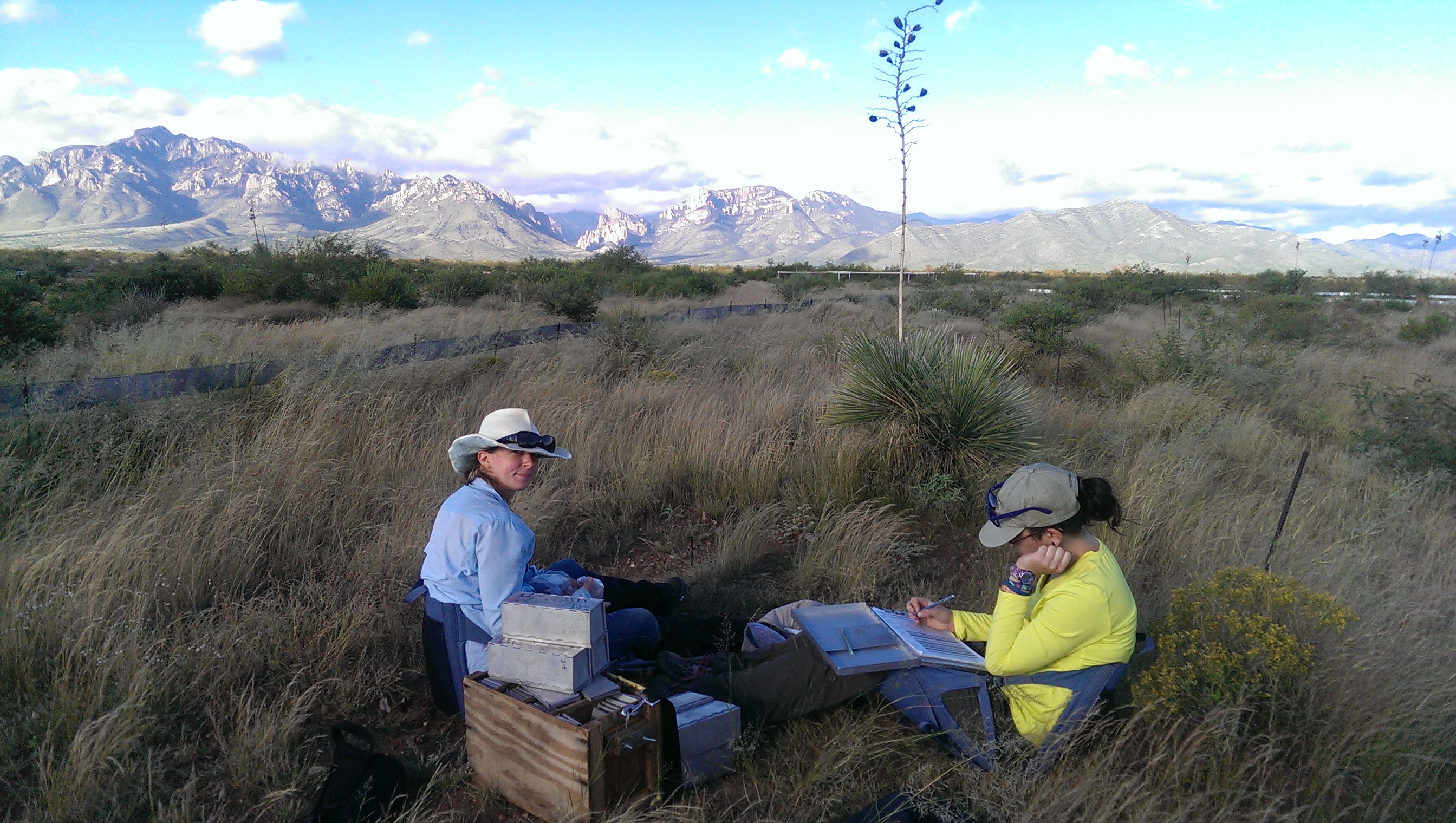
Last weekend, I peeked at the naughty bits of dozens of rodents. I was in the San Simon Valley, outside Portal, Arizona, at the site of a long term ecological project there. (Incidentally, a fantastic stargazing site as well! Thanks to Alan Strauss and his friends for letting the mammal studying group join them and their telescopes for a little while.)
A student from Morgan Ernest’s lab was trapping rodents and tagging them, as she does every month. I had joined them to compare the rates at which motion detecting cameras caught animals with the rates that the live traps caught animals. For example, here is a video in which the camera recorded a visitor that did not get caught in the trap:
When animals are caught, they are measured and tagged. Rodents’ genitals become enlarged when they are open to mating, so researchers with a live mouse in hand can easily see if it is physically ready to be reproductively active. Typically, rodents reproduce primarily during the warm months, from March to October. Since this was mid-January, I was surprised to see many females pregnant or lactating as if having recently given birth, males with enlarged sex organs, and even recent signs of mating in a female kangaroo rat. No one has yet examined the data to see if this is really an unusual number of reproductively active animals, but it seemed high to me, though I am not an expert.
I had always thought the cold temperatures increased the risk of freezing to death, and that was why they bred in the summer months. But 2014 was the hottest year since record keeping began in 1880. Could the animals simply feel warm enough to be active and to give breeding a go?
It was still cold enough that this Merriam’s kangaroo rat wanted to huddle next to a researcher to stay warm after being released.
Another important factor in both reproducing and staying warm is food energy. I recently went backpacking in southern Utah, hiking frequently through snow, and was amazed at how many calories I could – and needed to – eat to stay warm and active.
Snow on the ground and ice in the Colorado River! I typically am uninterested in food when exercising hard, but my fellow backpackers convinced me to pack more than 2600 calories per day, and it turned out that I needed all that to stay warm!
Substantial rains this summer at the Portal site made it the grassiest I have seen it in about five years. All that grass produces a lot of seeds, which many of these animals eat. Perhaps the larger amount of energy available is giving them the energy to go for it in January.
The Portal site with the rodent exclosures in September.
It is impossible to know if any one specific instance is a result of a long term trend in an otherwise variable system. Is the number of reproductively active rodents in January outside the typical range? Or even unusually high at all? Is it unusually high for grassy years? Is this one more small sign of larger changes in our climate?
If you have noticed small changes like this over the winter, I would be very interested to hear your stories.
Last week, I posted about my encounter with the impressively aggressive and carnivorous mice (Onychomys), which ended in me leaving a number of motion-sensing infrared video cameras at a long term ecology site near Portal, Arizona. I’m happy to report I have some footage of these mighty hunters. (The team from the Ernest lab had trapped a number of Onychomys they ID’d as species torridus on the plots where I placed these cameras just nights before, so my educated guess is that these videos are of O. torridus, but if any mammologists can distinguish the species more definitively from these videos, I’d love to hear about it.)
I baited the cameras with mixed birdseed, so I had lots and lots of videos of granivorous (seed eating) kangaroo rats and pocket mice to view, like these:
But about an hour after the pocket mouse (above) was last seen walking through that path in the grass, look who followed:
The southern grasshopper mouse (I think)! Also known as the scorpion mouse, because it takes down all kinds of dangerous and venomous arthropods, as well as animals nearly its own size. And ten minutes later it (or another one, can’t tell for sure) came back through again, definitely looking like it was tracking something:
Wait, why did I bait the cameras with birdseed when I was seeking carnivorous animals? Although grasshopper mice are carnivorous, they are commonly captured in live traps baited with seeds and oats. I had wondered whether they were at all interested in the seeds, or whether they smelled animals previously trapped in that box and were looking for prey – or whether they were just curious and exploring. (Plus, I was secretly hoping I would capture a grasshopper mouse killing the pocket mouse that was eating the bait. No luck.)
One video seems to answer my question: even if these mice can be completely carnivorous, some are open to trying new food:
I hear a certain large foreign TV network is working on a documentary about these animals. To get high-quality video images, they have to capture a number of animals, then stage encounters by placing a grasshopper mouse and, say, a tarantula in a sandbox together. I like to think that although my footage is less polished, it provides a complementary view of their lives by peering at what happens on a daily basis out in the wider world, where anything could happen.
Last weekend, I drove from Tucson down to a long term ecology research site near Portal, Arizona. It’s a site started by Jim Brown in 1977 with a series of fenced plots that look at the effect of rodents on the plants of the Chihuahuan Desert, now run by Morgan Ernest’s lab. It looks substantially different than the Sonoran Desert that I’m used to, but still spectacular laid out at the foot of the Chiricahua Mountains.
The Portal site with the rodent exclosures.
I was helping out with the monthly rodent census at the sites. Researchers from Utah State University travel to the Portal Site for a long weekend every month to live trap and mark small mammals. I was also interested in comparing camera trap encounter rates with live trap rates as the seasonal and inter-annual population density fluctuations occur, so I set up my cameras, after dark, on the first night I got there. (Yes, I also wanted to see if the pocket mice near Portal dance. I suspect they do.)
Lovely spot for some smammal research.
While I was setting up the cameras in the dark, I thought I heard the faint squeal of a truck’s breaks. It lasted maybe two seconds. But no headlights were visible in the dark San Simon valley. I heard it again and again as I walked around a quarter hectare plot, setting out cameras.
It turns out the squeal is actually an itty bitty howl, emitted by the only genus of carnivorous mice. Yes, if you thought mice were scary before, just think of an aggressively hunting mouse standing on its hind legs to howl upward at the sky. They have short, stubby tails, and typically eat, well, grasshoppers, I guess. It is grasshopper season in Portal, and the horse-lubbers especially cover every surface, and are slow to move or respond. Easy prey.
See that short and stubby tail?
However, one of the other grad students had a story of releasing a Bailey’s pocket mouse (an animal weighing about 20 grams), and seeing a recently released grasshopper mouse (about 25 grams – not much larger!) seize it by the throat and drag it down a hole. They must be at least somewhat omnivorous (eating things other than meat), because we caught several in the Sherman live traps that were baited with millet seed.
Racing quadrepedally through the grass.
Wikipedia claims they have home ranges of approximately 28 acres and are very territorial, but we caught three in less than a quarter hectare. But they certainly move differently than the pocket mice and kangaroo rats that made up the bulk of the captures. Those others (in family Heteromyidae) are boing-y, bouncing around, like, well, a kangaroo. The grasshopper mice, when released, scurried off through the grass in a more fluid, slinky way, like a cat or a ferret, using all four feet and close to the ground.
I plan to pick up my cameras next week. I look forward to seeing what video – and audio – I have of the unique species there.
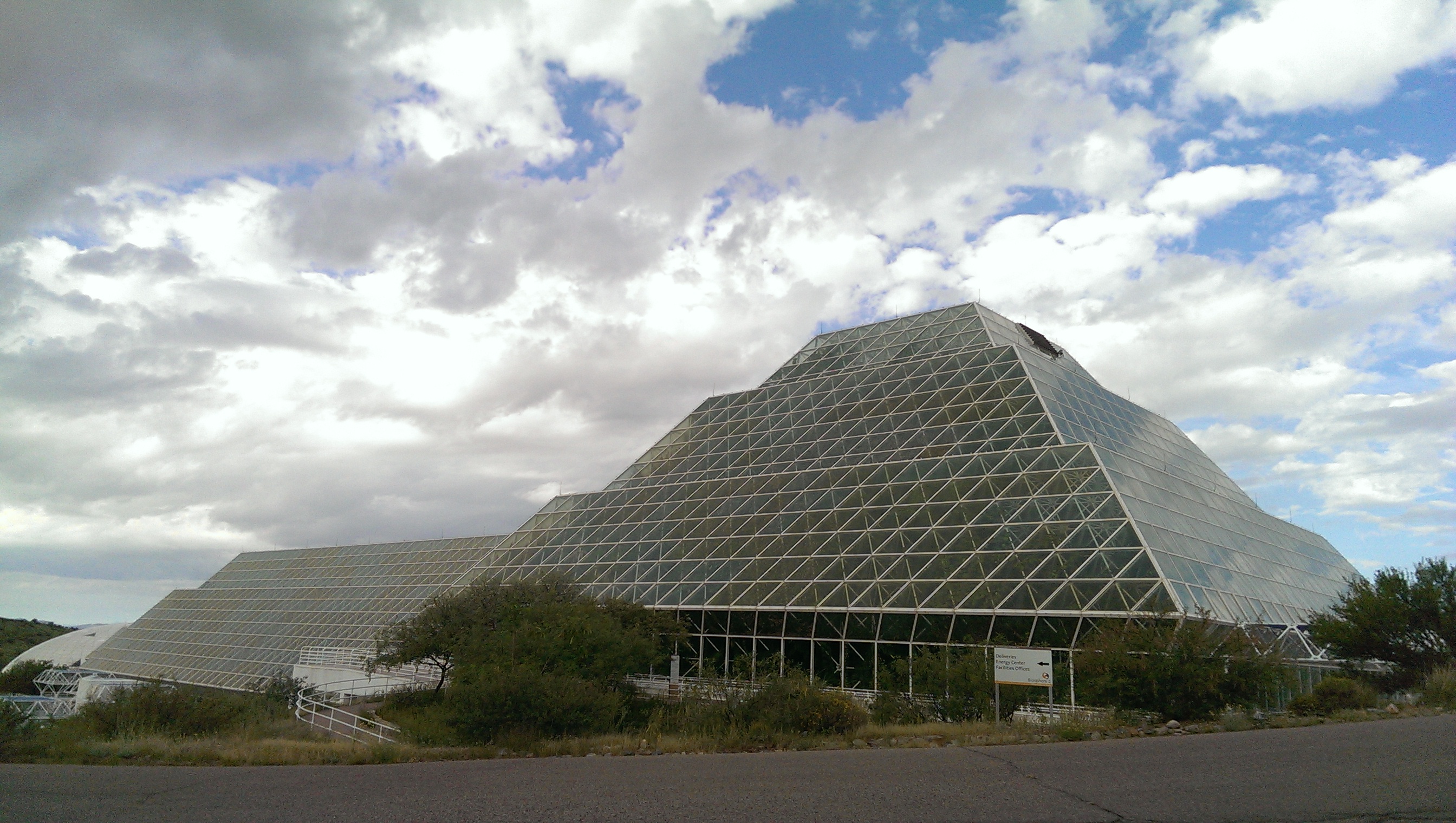
The first time I saw the Biosphere 2 space frame structure, it reminded me of a giant jungle gym. Actually, every time I see Biosphere 2, it looks like a giant jungle gym. I’m sure I’m not the only one who stares at it, imagining how to to climb it.
It’s just that I finally got to.
Biosphere 2’s rainforest from outsideDoesn’t it look climbable?
In my last post, I wrote about a summer excursion to the Brazilian Amazon to help with research on the future of the Amazon under climate change. I was helping Neill Prohaska and other members of Scott Saleska’s lab and the GO Amazon project measure seasonality and reflectance of leaves, which is part of a larger effort to understand what would happen if the climate there gets hotter and drier.
Similarities between taking measurements in the Amazon and measurements in B2: you get to climb and cut sample branches. Differences: everything else.
But back in the early 1990’s, Biosphere 2’s original builders included a tropical rainforest in their structure. Now researchers can do the experiment by creating a drought for an entire stand of living rainforest trees, which is tricky to do in the Amazon. In fact, they kind of already have.
Over the years, as the facility changed hands, it experienced a gap during hot Arizona summers with virtually no air conditioning or rainfall – an extreme version of climate change. Another member of Scott’s lab, Ty Taylor, has analyzed the concurrent change in the tree species remaining. (I should point out that the species in B2’s forest are not all Amazonian, but from around the world, so it’s not a perfect analog in several ways.)
But Dr. Joost van Haren wants to know what happens to individual trees and to the system’s ability to photosynthesize and grow, storing carbon dioxide from the air, during a drought. So for the last 8 weeks, the B2 tropical rainforest has experienced a drought. This weekend, I was part of a small team that helped take some vital rates of photosynthesis activity in the rainforest.
By far the most exciting part was the pre-dawn climb up through the space frame to cut sample branches. I was actually not helpful at all in this part – Neill scampered around the structure like a capuchin, while I moseyed upwards comparatively like a sloth. I didn’t cut a single branch.
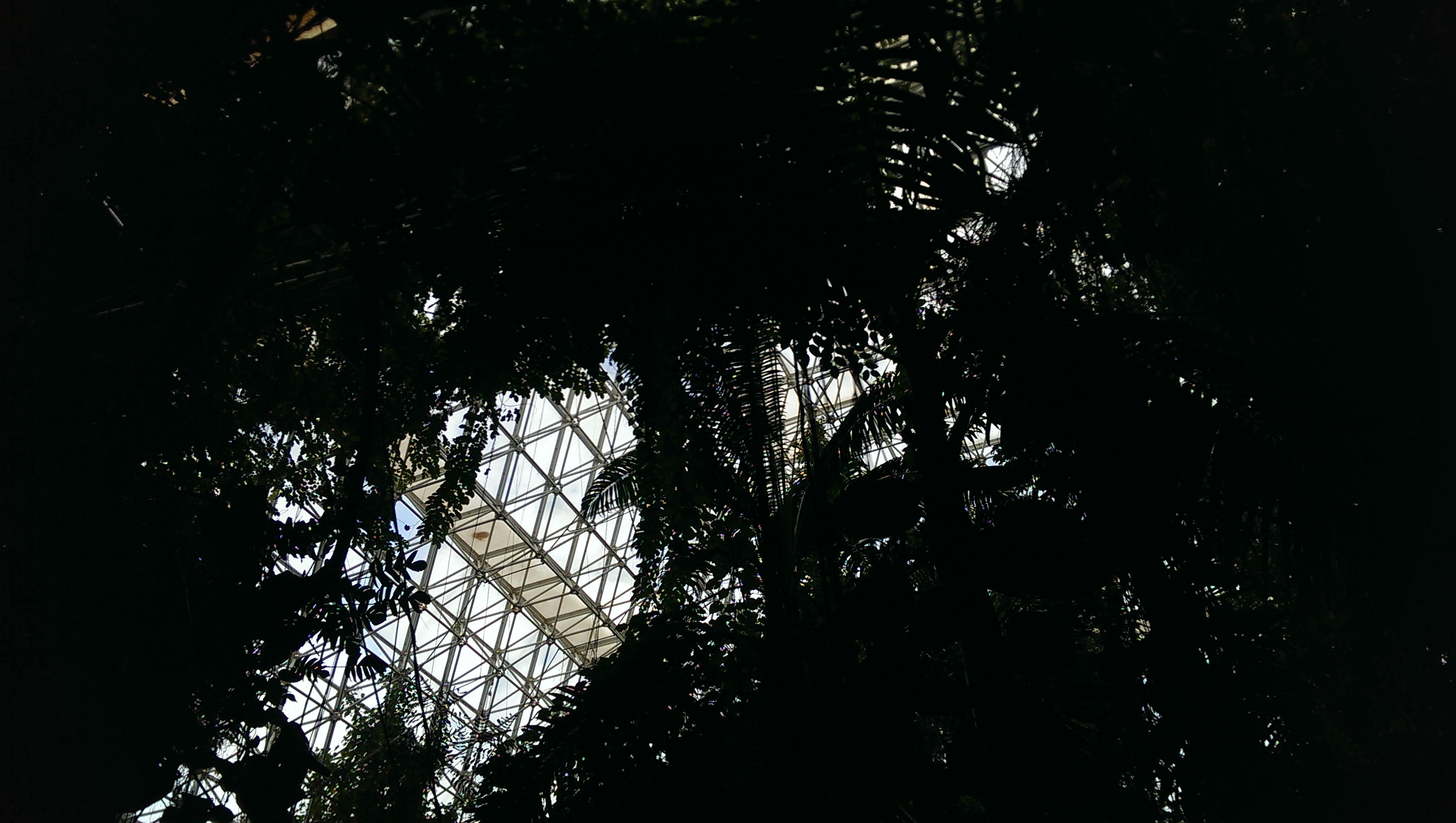
It turns out when you approach the space frame closely, the struts are a little bigger than your school yard jungle gym, a little slicker with condensation (even during the drought they were a little wet), a little more likely to be covered in vines to catch you…. and the whole thing is a little bit taller.
And while we used harnesses and safety devices that clipped to these struts, these static lines would hurt to fall on, even if you didn’t break a bone hitting the bars of the frame on your way down.
“Don’t fall,” Neill told me. Eek!
I didn’t fall, even climbing all the way to the top of the rainforest section to watch the sunrise, where a bird flew in through an open vent and perched on the struts nearby.
If YOU haven’t seen the rainforest for a while, you should join me some Saturday evening in October out at Biosphere 2 for pizza, live animals, telescopes, and more. This is a shameless plug, since I’m helping to coordinate these Discovery Nights, as the late evening events are called, but seriously, you should get some friends together and go. I’ll be at all three. There will be live animals, fossils or meteorites, telescopes, and the chance the wander through B2 in the dark at your own pace instead of with a large tour. Oh, and your admission fee includes an annual pass on those nights. And kids are free. (If YOU want to get in free as well, you can volunteer all evening! Send me an email ASAP if you want in.)
Promotional photo from the flyer for Discovery Nights. It’s a neat place to chill after dark, not going to lie. All the cool cockroaches will be there.
I usually study population dynamics in the upper Sonoran Desert near Tucson, but since I am still entering data from last summer’s fieldwork and analyzing it, I took my laptop down to Brazil for nearly a month. While I’m here, I also get to climb massive trees and learn about the questions and methods used by Scott Saleska’s lab to better understand the future of the Amazon under climate change.
Climate models predict wildly different things about how the Amazon Rainforest will respond to a new climate, but all agree that whatever happens will have a big effect on the rest of the world’s climate. There is a lot of carbon stored in these trees, and if they release that to the atmosphere through dying or burning, it will accelerate global warming. On the other hand, if they grow bigger and faster, they might actually buffer the climate by taking up more carbon dioxide.
One problem is that no one really knows how these trees respond to changes in the climate. Our best understanding, captured in mathematical models, predict that drought would cause the forest to die back, looking barer and browner. Yet during recent droughts, the forest appeared to green up! Was it because the forest is light limited and fewer clouds meant more light for the plants to grow? Would that response continue if the drought continue?
It turns out that in a very diverse forest like the Amazon, no one really knows how the leaves behave. Unlike in, say, New Hampshire, where trees all put out buds around the same time and then lose their leaves around the same time, this forest appears evergreen. Since leaves don’t live forever, we might assume trees replace their leaves. But how often? All at once, or on a sort of rolling basis? Regularly, or in response to some environmental signal? Tree species might behave very differently – after all, some grow fast in response to forest gaps, while others grow slowly in the shade of larger trees until they reach the canopy. So how similar are their leaf lifespans and replacement strategies? These answers are pretty difficult to answer, especially because walking up to a tree whose lowest branches are over 100 feet in the air makes it very difficult to look at their flowers – or even their leaves.
Fortunately, with improved arbor techniques, climbers can now safely access much more of the canopy to measure and tag individual leaves. Imaging and remote sensing might be calibrated to in the future provide an even faster way to measure leaf age and species identification. I’m enjoying learning both techniques for measuring leaf traits and leaf demography as well as for climbing into the canopies. And I’m especially enjoying thinking about a completely different set of scientific questions: questions about movement of water and carbon through a whole ecosystem, instead of competition, predation, and population dynamics.
Grad student Neill Prohaska shows the lab’s newest member some equipment.Alejandro learning to climb an access line into a 40m high canopy.
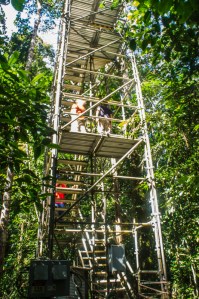
One instrument tower has stairs for easy access.Neill at the top of the walk-up tower, looking out over the canopy of the Tapajos National Forest. I was surprised how diverse the canopy structure was.The other tower, which measures the carbon flux of the forest, must be climbed like a ladder, wearing a harness.
Where does the grassland end and the pinion-juniper forest begin? Looks simple from back here, but hike to the first juniper you find, and there is still an awful lot of grass….
Drawing lines is hard. In a variable and idiosyncratic world, our tendency is to lump ideas or places into groups. We learn in preschool to categorize, to delineate, and later to characterize and describe those categories. This leaves us frustrated when we look closer at where those lines should be, and they become difficult to draw.
Very frustrated.
Last week, I posted about Dave Bertelsen, who has recorded flowering plants along a five mile section of trail ascending the Santa Catalina Mountains for nearly 30 years. The vegetation’s structure, species identity, and density looks very different at an elevation of 8,000 feet than at 5,000 feet, which looks different than plants at 3,000 feet. Biologists commonly recognize these as different “communities,” “biomes,” or “assemblages” of plants, but when you hike from 2,500 feet up to 6,000 feet, you realize it is hard to draw a line between them on the ground. It makes perfect sense when you think of each individual species responding to the temperature, moisture, soil, competition from other plants, and herbivory from animals, but it makes generalization more difficult.
Another line that becomes difficult to draw when you think about it too hard is which areas to ask the US Congress to designate “Wilderness.” That designation is the highest legal protection against housing developments, mining, and other activities that would change the character of a place. We probably each have an idea of what wilderness looks like, and what activities are compatible with wilderness. But those ideas may vary from person to person in ways that seem subtle when viewed as an abstract national policy, but can be very important when that line touches a place you love.
Earlier this week I attended a meeting of the Southern Arizona Climbers’ Coalition. I had been meaning to join them for nearly a year, when they first formed. After all, I didn’t just move to Arizona for grad school. My list of potential advisors was strictly within a few hours of decent rock climbing. At this meeting, I had been invited to give a short presentation on the ecology of the region, and I used it as an opportunity to ask what ecology should be included if you had only two pages in a guide book. Being down in the weeds, it can be hard to see the big picture of the desert and Sky Islands, even from the top of a six pitch crag. Thanks to the folks who responded to that question – if you have an opinion, especially if you’re new to the area – please email me or leave a comment on this post!
Almost more valuable than those comments were the conversations I had about ongoing land management issues. Climbers enjoy and value wilderness, I suspect more than much of the general public. The recent shift of land management agencies toward prohibiting safe and practical rock climbing in areas being managed for wilderness character changes the way the increasingly large segment of the public uses the land. It also puts the climbing community in the very awkward position of somehow opposing wilderness designations. Of course we want to protect the landscape from mines, off road vehicles, and other large impacts. But it seems ludicrous to lump rock climbing in with mining and road creating, especially when a majority of climbers practice Leave No Trace ethics (though not as many as I wish would). Many of us have worked or volunteered with, or for, or been members of organizations like The Wilderness Society, which are promoting more wilderness designations.
I definitely see rock climbing in the traditional style (trad climbing) being consistent with wilderness character. Typically (these days) anchors and gear are primarily removed, with the possible exception of webbing used to rappel off the top of the climb, which eventually fades and disintegrates – eventually, not fast, but still eventually. One of the earliest North American pioneers of rock climbing, John Muir, who was also a wilderness advocate and started the Sierra Club, would have agreed, I think, though he likely would be astounded at our safety technology today. Maybe, like many old climbing hardmen, he would be contemptuous, too, but I like to think his vision, compassion, attention to detail, and evidence based values would have won him over to the freedom of climbing having a place, even in wilderness. Judiciously, of course, and with climbing ethics firmly in mind.
But what about sport climbing, in which metal bolts are drilled into the rock, usually requiring a mechanized drill, and left for following climbers to use? Those bolts also need to be replaced periodically that practically for the safety of the climbers. These bolts are rarely visible except right next to a crag (and sometimes maddeningly invisible to a climber on the route), so they are unlikely to heavily impact the wilderness experience of nonclimbers. Rock climbers who want a pure experience, a true pathfinding adventure without metal cairns, may not appreciate their presence, although my understanding of climbing ethics is to not place bolts where finding alternative protection is actually possible. This is definitely not a cut and dried area – especially when you consider drilling in metal rap anchors at the top of a popular trad route to make the descent safer (or possible).
Should leaving any gear or drilling bolts be allowed in areas where we want to preserve wilderness character? Wilderness is, after all, an important legal protection for areas that we would like to keep climbing against threats like mining that would completely remove access. If even wheelbarrows are prohibited, can exceptions be made for mechanized equipment like drills? Actually – what about cameras and wristwatches and smartphones? Are only mechanized things that interact with the landscape prohibited? That touch something other than the person? Where do you draw that line?
Somewhere like Cochise Stronghold, a backcountry area whose rugged terrain practically protects itself from offroad vehicles and even off train mountain bikes, certainly includes rock climbing in its wilderness character. Anecdotal evidence from climbers there suggest that a few humans climbing the rocks slowly and awkwardly (okay, some of us more slowly and awkwardly than others) does little to strike fear into the hearts of nearby animals. Anecdotal, to be sure. And does the short term presence of a drill’s racket increase that disturbance? By how much? (I am currently writing a paper on how the ecology of fear affects biodiversity, and I would love to collect more rigorous empirical data on the effects of climbers.)
I had a good series of conversations with other members of SACC following the meeting about other access issues related to ecological and species specific concerns. One of my greatest frustrations as a recent college graduate back in D.C. dealing with gigantic policy concerns and disagreements between close allies in environmental issues was my lack of expertise. Besides the lack of climbing in the Washington area, that was a major factor in driving me to pursue a Ph.D. in a basic science department.
It’s been nearly five years to the day since I packed my mountain bike and clothes into a station wagon, and drove three days to Arizona and begin a Ph.D. in Ecology and Evolutionary Biology. Although I had spent the previous 18 months working on federal environmental policy, I chose a basic science department, rather than one dedicated to solving immediate and applied issues. This even despite the fact that the 6 months prior to my position in D.C., I had worked for BLM in Nevada, and before that for a lab studying the effects of an invasive plant. My entire post-college professional experience was in solving pressing environmental problems, and I walked into a department where that training was not particularly valued, and instead the focus was on what questions would move the state of human knowledge forward. Perhaps a naive choice, but perhaps wise. After all, I had been glad that as an undergraduate, I focused on a degree in Biology (Scripps being a small liberal arts college, we had no differentiation possible within that major at the time) rather than an attractive interdisciplinary major in Environment, Economics, and Politics.
I’m not done with my PhD yet. I’m still writing and revising drafts of papers for publication, some of which will eventually become my dissertation. It feels like a long slog sometimes. An exciting and endlessly fascinating slog, but nevertheless long.
I may be still slogging the long slog, slog by slog, but it felt good at that meeting to offer my background in ecological theory, local field work, and access to current scientific literature to contribute to the conversation between climbers and land managers. I came away with ideas for new topics I want to research in my spare time (ha).
I would say it felt spooky for my former world of negotiating differences in environmental allies to collide with my current research and climbing worlds in so personal a way, but I’m actually more surprised it hasn’t happened sooner.
What I’m placing behind my ear is no tropical flower: that is the rind of a saguaro fruit, burst open to reveal the deliciousness inside! Behind me, most shrubs like the ocotillo are leafless. Thanks to Elena Martin for the photo.
The news (and some photos on Facebook) would have me believe the summer is all about sitting on the beach, enjoying a fast paced book. But my last three summers in the Sonoran Desert have been a race against time to census seedlings as they pop up and quickly die following the patchy monsoon thunderstorms. The seasons have been full of long days in the hundred degree plus heat, and dreaming of seedlings again in my sleep.
Actually, the monsoons that just began may have brought a silent sigh of relief from many dry and browning plants in the region. The long, arid early summer was finally over. June can be a miserable time of year, made bearable by the fact that candy falls out of the sky. Saguaro fruits (Carnegiea gigantea) ripen and split open during June, revealing the sugary flesh surrounding thousands of seeds the size of poppy seeds. Those the white winged doves fail to eat off the cactus fall to the ground, where, if we are lucky, we find them before the coyotes, javelinas, or ants. As they dry in the sun, they reach a sticky, chewy, very sweet consistency, broken by the bitter crunch of the seeds. A little like a date or a fig, maybe. Mostly it tastes like a saguaro.
A few species seemed to jump the gun on the monsoons. During a season when most stems are brown and the only leaves that dare show themselves whither reticently, the limberbush (Jatropha cardiophylla) in the Santa Catalinas started to put out small leaves and even to bloom, a full two weeks before the monsoon rains arrived! I observed them myself on a hike up the Finger Rock Trail with naturalist David Bertelsen and environmental science teacher Elena Martin on June 27. In this unpredictable region, with its patchy storms and fickle promise of rain, why spend the energy and the water to make flowers prior to the storms hitting? Where had the plant held on to this reserve of moisture? Was it to get the jump on all the other plants when the rain finally hit? Do limberbush in other canyons, and other mountain ranges have this same phenology? Do they always in the Catalinas?
Dave is one of the few people who could may actually be able to answer that final question, by checking his notes. Nearly 30 years ago, he set out to hike the Finger Rock Trail weekly for 20 years, all the way from Tucson to the top of Mount Kimball, and record all flowering species and which section of the trail they appeared in. The result is a rich data set of phenology (the seasonal timing of events) of the flowering plants along that trail, which climbs thousands of feet in elevation. He has published several papers on this data, along with Theresa Crimmins and Mike Crimmins. I was astounded that he had a vision right from the start of the degree of dedication and the amount of time he planned to continue. It was a bold vision, especially for someone who was working a full time job – and not a research job.
Speaking of working full time at a job outside of academia and even scientific research, we had a conversation along the way about the term “citizen scientist.” To me, that term evokes the National Guard’s advertising campaigns for “citizen soldiers,” individuals who have a high degree of training and professionalism in their military duties, even while not being full time employed as such. But Dave hears it differently: he wonders why the “citizen” need be there at all. It implies that scientists are a class apart, excluding the general public, instead of being accessible to anyone pursuing answers through rigorous use of the scientific method. Charles Darwin, for example, was not a professional scientist, but made great contributions to scientific fields. Albert Einstein was employed full time at a patent office while he developed much of the early theory of relativity. Dave suggested the term “naturalist” has a less diminutive connotation for people studying nature without an official posting to do so.
After our hike, I was reading through the final entries in the field journals kept by students on the field course I recently helped teach. One of the final questions posed by the main instructor was, “What research project would you want to go spend an additional three weeks studying?”
Forget three weeks, I thought. Be bold like the Jatropha. Start now, and in 20 years, you’ll have the jump on the others, you’ll have that data set.



















 Biologist. Explorer. Storyteller.